
Ramadan and Fasting in Islam: Complete Spiritual Guide 2026
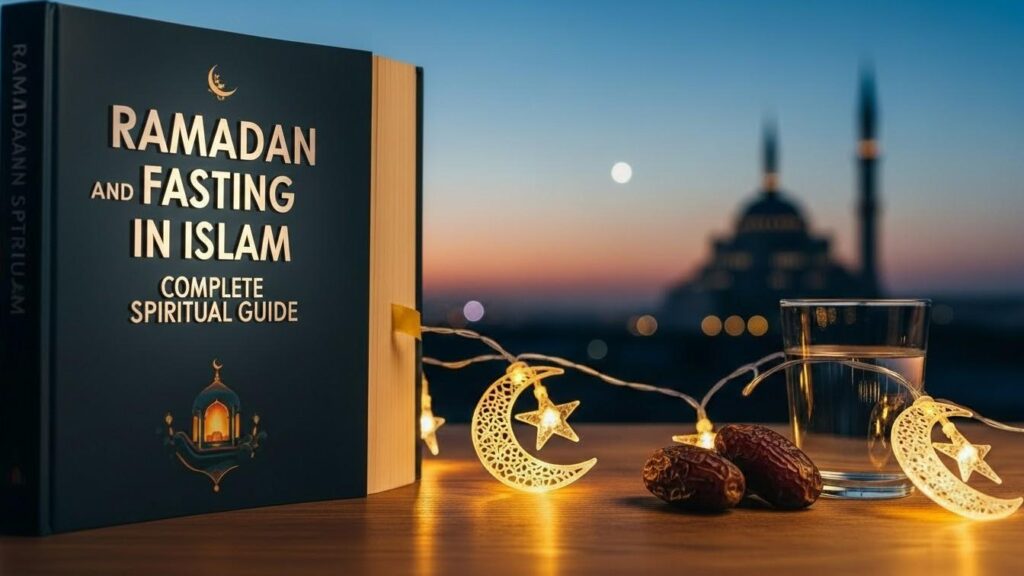
What is Ramadan and fasting in Islam?
Fasting in Islam during Ramadan month (9th month of Islamic calendar), Muslims are required to fast, which aims to achieve physical abstinence as well as spiritual purity and piety (fear of God).
“The month of Ramadan and fasting has high importance in Islam. The divine revelation ‘Quran’ was sent as guidance to the people (Quran 2:185)”.
Ramadan and fasting is not just about going hungry and thirsty, but it is a spiritual discipline that teaches patience, compassion, and self-discipline.
During the fast, Muslims abstain from evil and increase in good deeds so that they can draw closer to Allah.

Quran and Fasting in Islam
- “O you who believe, fasting is prescribed for you as it was prescribed for those before you, that you may become righteous (2:183)”.
“A specified number of days; then whoever among you is sick or on a journey, then he should make up the specified number of other days; and for those who are able, the ransom is the feeding of a poor person; and whoever does good of his own free will, that is better for him; and fasting is better for you, if you only knew (2:184)”.
- “The month of Ramadan is that in which was revealed the Quran, a guidance and clear proofs for mankind; so whoever of you is present in it, let him fast it; and whoever is sick or on a journey, let him make up the number of other days; Allah intends for you ease and does not intend for you hardship (2:185)”
- “It is lawful for you to have sexual intercourse with your wives on the night of fasting; they are your garment and you are their garment; … then complete the fast until nightfall (2:187)”.
Importance and Benefits of Ramadan and fasting in Islam
Fasting is also an act of worship that provides some medical benefits to humans, as the majority of scholars acknowledge that avoiding overeating is beneficial for health.
During Ramadan and fasting, a person is saved from overeating (provided that he abstains from heavy and heavy foods, contrary to common practice).
However, this is a side benefit, the real purpose of Ramadan and fasting is the spiritual and heart benefits that the fasting person receives if he observes the fast with its conditions and manners.
“The greatest benefit of fasting is the attainment of piety, which Allah Almighty Himself has stated: (Al-Baqarah: 183/2) Fasting has been prescribed for you so that you may become pious”.
“Because fasting is also an act of worship and Allah Almighty has also stated that the purpose and benefit of worship is the attainment of piety”. (Al-Baqarah: 21/2)
Important Question on Importance of Fasting
- What is this piety (Taqwa) that is created in a person by Ramadan and fasting?
- How is it created by Ramadan and fasting?
- What are the benefits and fruits of piety?
Taqwa means that the greatness and majesty of Allah Almighty becomes prevalent in the heart in such a way that a person refrains from committing disobedience to Him, takes every step thoughtfully and follows His instructions and teachings at every stage of life and in every matter.
If a person passes through a narrow passage with thorns on both sides, he will walk through such a passage holding his clothes and wrapping his clothes so that his garments do not get entangled in the thorns. Taqwa is also the name of living life by being careful and protecting himself from sin.
This piety is born from Ramadan and fasting in such a way that while Ramadan and fasting , a believer does not eat, drink or satisfy his sexual desire with his wife, although in normal circumstances none of these things are forbidden or forbidden for him.
Eating and drinking is also a lawful thing and having intercourse with his wife is also a permissible thing.
But a believer does not do these lawful things during fasting (dawn to dusk), not even within the four walls of his house where no one can see or stop him. This is the same piety of Allah that is born in him through fasting.
When a believer does not do even lawful things out of fear of Allah Almighty simply because Allah Almighty has forbidden them during Ramadan and fasting and he refrains despite no one seeing him, then it is as if Ramadan and fasting has created in him that piety which is the real purpose of Ramadan and fasting .
If a person makes this monthly practice a part of his consciousness and awareness, then surely this fear of Allah Almighty can remain with him at every step and can prevent him from disobeying Allah Almighty at all times.
When a person temporarily refrains from permissible and halal deeds due to the fear of Allah Almighty, how can a believer and a pious person commit the things and deeds which Allah Almighty has declared forbidden and unlawful forever?
This obedience to Allah Almighty in the moments and times of the day and night creates within him the passion and awareness of Allah Almighty’s servitude and servitude and humility and self-surrender before Him that man has nothing of his own, everything belongs to Allah and is for Allah alone.
Every moment and every hour has to be spent in the path of Allah Almighty or according to His will and intention. This is called perfect servitude and perfect servitude which is required of man.
Two things lead to sin and disobedience
Generally, two things lead to sin and disobedience to Allah Almighty.
🔥
One is the increasing desire of the soul and its rebellion
😈
The other is the existence of Satan and his cunning deception
In the holy month of Ramadan, the rebellious devils are chained, which certainly increases the tendency towards goodness and fosters an atmosphere of God-fearing.
If a person takes full advantage of this increase in goodness and the environment in Ramadan, then it can certainly remove the corruption of his mood and character
The meaning of patience includes the following things:
- Controlling one’s self and avoiding the things forbidden by Allah Almighty and its sins. Ignoring the pleasures of the self and its animalistic demands in comparison with the commands of Allah Almighty.
- To bear with a cheerful face the difficulties that arises in practicing the religion of Allah Almighty and not caring about the curses and reproaches of people.
Rules for Ramadan and fasting in Islam
Person age and Fast
Fasting is obligatory on every adult Muslim who is able to fast. Fasting is not obligatory on minor children. However, they should be made to fast according to their ability, so that, on the one hand, they become accustomed to it.
Ramadan and fasting rules
- The time of Ramadan and fasting is from “dawn to sunset”.
- Food should be eaten before dawn and then all the breaking fasts should be avoided until sunset.
- At Sunset, you can break you fast.
Things forbidden in Ramadan and fasting
- Listening to and watching obscene and vulgar programs, music on radio and TV.
- Playing cards, chess and other such games. Pornographic novels, stories and plays.
- Chatting with friends, gossiping, joking and other indecent acts.
- Talks and actions based on sexual desires. These idle words and actions are especially prohibited during Ramadan and fasting.
Therefore, all the above-mentioned things and actions should be avoided.
Ramadan and fasting in Islam rules
Eating during Fast
🍕
Eating and drinking intentionally will break the fast. However, if someone feeds him something by mistake or force, the fast will remain valid
Vomiting and fast
🤮
Vomiting intentionally will break the fast. However, if vomiting occurs spontaneously due to a medical condition, it will not break the fast.
Masturbation, sex and fast
❤️
If you masturbate while awake, ejaculate semen or have sex, the fast will be broken. However, if you ejaculate semen in a dream, the fast will not be broken because it is an involuntary act..
Blood and fast
🩸
It is as if the discharge of blood from the body does not invalidate the fast.
Women Periods and Fast
🔴
Women are prohibited from fasting during menstruation and postpartum period. Menstruation means menstruation and postpartum period means the period of childbirth. The postpartum period is considered to be a period of forty days until the bleeding from childbirth stops
Whenever the bleeding stops, you can start fasting again. For missed fasting days, it is necessary to make up for it later.
Traveller & Ramadan and fasting
✈️
“…Whoever among you is ill or on a journey, then (fast) a number of other days.
Allah intends easefor you, and He does not intend hardship for you…” (2:185)
Commonly Asked Question
Why Ramadan is celebrated
Ramadan is the ninth month of the Islamic calendar. It is a month of self-control, patience, and good morals. Ramadan and fasting during this time helps one control one’s desires, gain a better understanding of others’ situations through hunger and thirst, and refine one’s thinking and behavior. The month emphasizes goodness, compassion, and a sense of social responsibility.
Can you drink water during Ramadan?
No. Drinking water is prohibited during fasting.
- Fasting begins at the first light of day, Fajr, and ends after sunset.
- Drinking water during this break breaks the fast.
However, it is permissible to drink water before the fast begins and after sunset.
How Ramadan is celebrated
Ramadan is observed in an organized and regular manner:
- Eating and drinking before the first light of day and the time of dawn
- Abstinence from eating, drinking, and bad habits from the first light of day/the time of dawn until sunset
- Adopting discipline, patience, and a positive attitude during the day
- Breaking the fast and eating after sunset in the evening.
- 100% complusory to Pray Namaz (Salah)
- Focusing on helping others, giving charity, and doing good deeds
- Expressing collective joy and gratitude at the end of the month
Does vaping break your fast in Islam?
- Yes. Vaping breaks the fast because it involves inhaling vapors and chemicals.
- Smoking, cigarettes, or vaping of any kind is not permissible during Ramadan and fasting.
This practice is considered to be against the purpose of discipline and self-control.
Ramadan and fasting days in Islam
- Ramadan and fasting during Ramadan is usually observed for 29 or 30 days.
- These fasts are for adults and healthy people.
In addition, people also fast voluntarily on other days of the year, but the fasts of Ramadan are the most important.
Can you brush your teeth while Ramadan and fasting in Islam?
Yes, it is permissible to brush your teeth during the fast, provided that the water or paste is not swallowed.
- As a precaution, many people brush their teeth during the day with a dry brush or without paste so as not to affect their fast.
- A miswak can be used for this purpose as it does not involve the risk of swallowing water or paste.
A miswak helps keep the mouth clean and does not affect the fast, provided that it is used correctly.
How many days until Ramadan
Ramadan begins each year based on the moon, so the exact date is not fixed in advance, but expected starting from
18, February, 2006
The Ramadan month usually lasts 29 or 30 days.
The remaining days are calculated based on the current date.
Ramadan Calendar 2026
☪️📆
Ramadan 2026 / 1447 AH Calendar – Ramadan and fasting Schedule
| Ramadan Day | Gregorian Date | Day of Week | Islamic/ Hijri Date (Ramadan 1447 AH) |
| 1 | Feb 18 | Wednesday | 1st Ramadan |
| 2 | Feb 19 | Thursday | 2nd Ramadan |
| 3 | Feb 20 | Friday | 3rd Ramadan |
| 4 | Feb 21 | Saturday | 4th Ramadan |
| 5 | Feb 22 | Sunday | 5th Ramadan |
| 6 | Feb 23 | Monday | 6th Ramadan |
| 7 | Feb 24 | Tuesday | 7th Ramadan |
| 8 | Feb 25 | Wednesday | 8th Ramadan |
| 9 | Feb 26 | Thursday | 9th Ramadan |
| 10 | Feb 27 | Friday | 10th Ramadan |
| 11 | Feb 28 | Saturday | 11th Ramadan |
| 12 | Mar 1 | Sunday | 12th Ramadan |
| 13 | Mar 2 | Monday | 13th Ramadan |
| 14 | Mar 3 | Tuesday | 14th Ramadan |
| 15 | Mar 4 | Wednesday | 15th Ramadan |
| 16 | Mar 5 | Thursday | 16th Ramadan |
| 17 | Mar 6 | Friday | 17th Ramadan |
| 18 | Mar 7 | Saturday | 18th Ramadan |
| 19 | Mar 8 | Sunday | 19th Ramadan |
| 20 | Mar 9 | Monday | 20th Ramadan |
| 21 | Mar 10 | Tuesday | 21st Ramadan |
| 22 | Mar 11 | Wednesday | 22nd Ramadan |
| 23 | Mar 12 | Thursday | 23rd Ramadan |
| 24 | Mar 13 | Friday | 24th Ramadan |
| 25 | Mar 14 | Saturday | 25th Ramadan |
| 26 | Mar 15 | Sunday | 26th Ramadan |
| 27 | Mar 16 | Monday | 27th Ramadan (Likely Laylat al-Qadr) |
| 28 | Mar 17 | Tuesday | 28th Ramadan |
| 29 | Mar 18 | Wednesday | 29th Ramadan |
| 30 | Mar 19 | Thursday | 30th Ramadan (Last Day of Ramadan and fasting ) |